
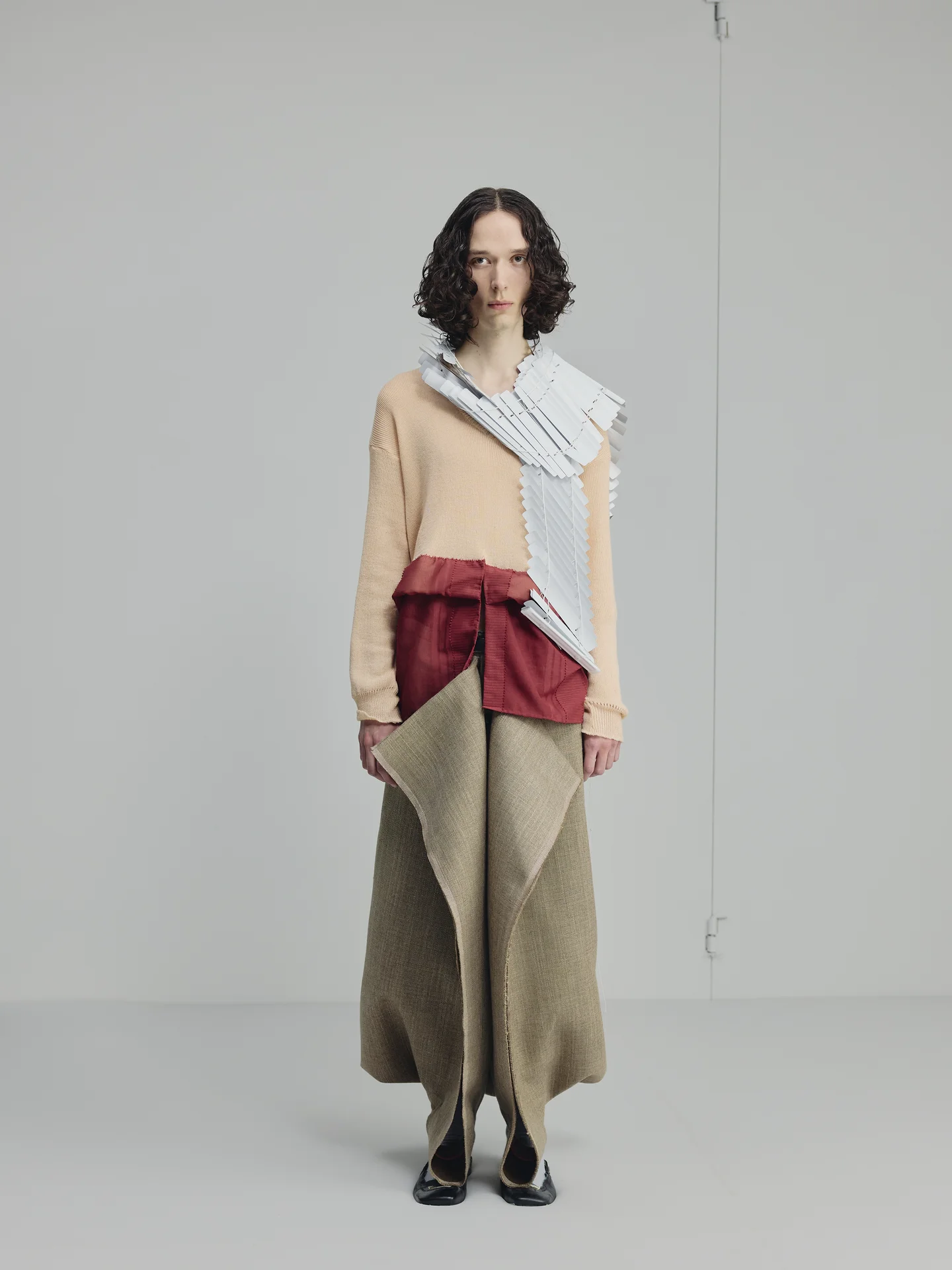
 TP 01
TP 01
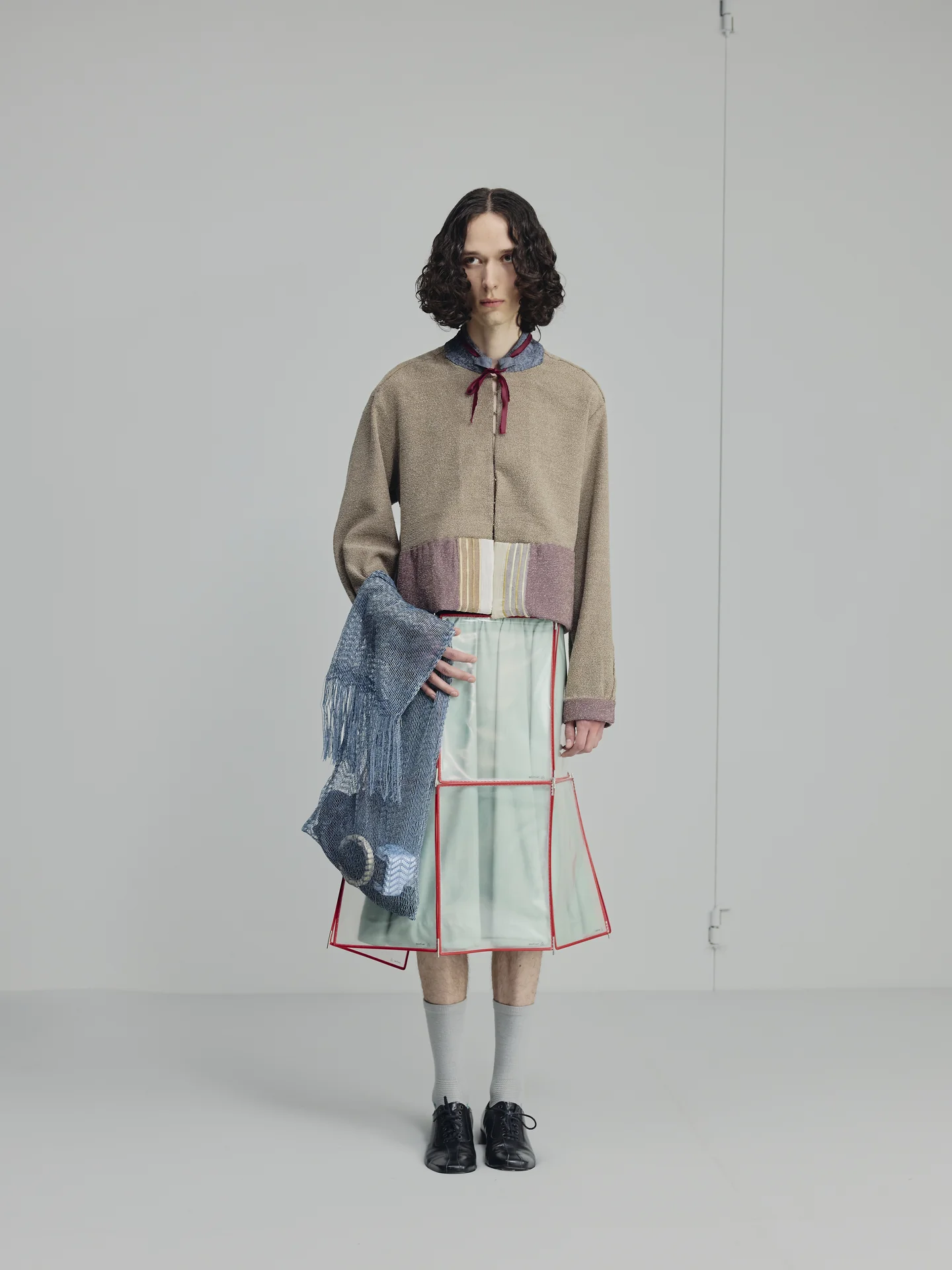 TP 02
TP 02
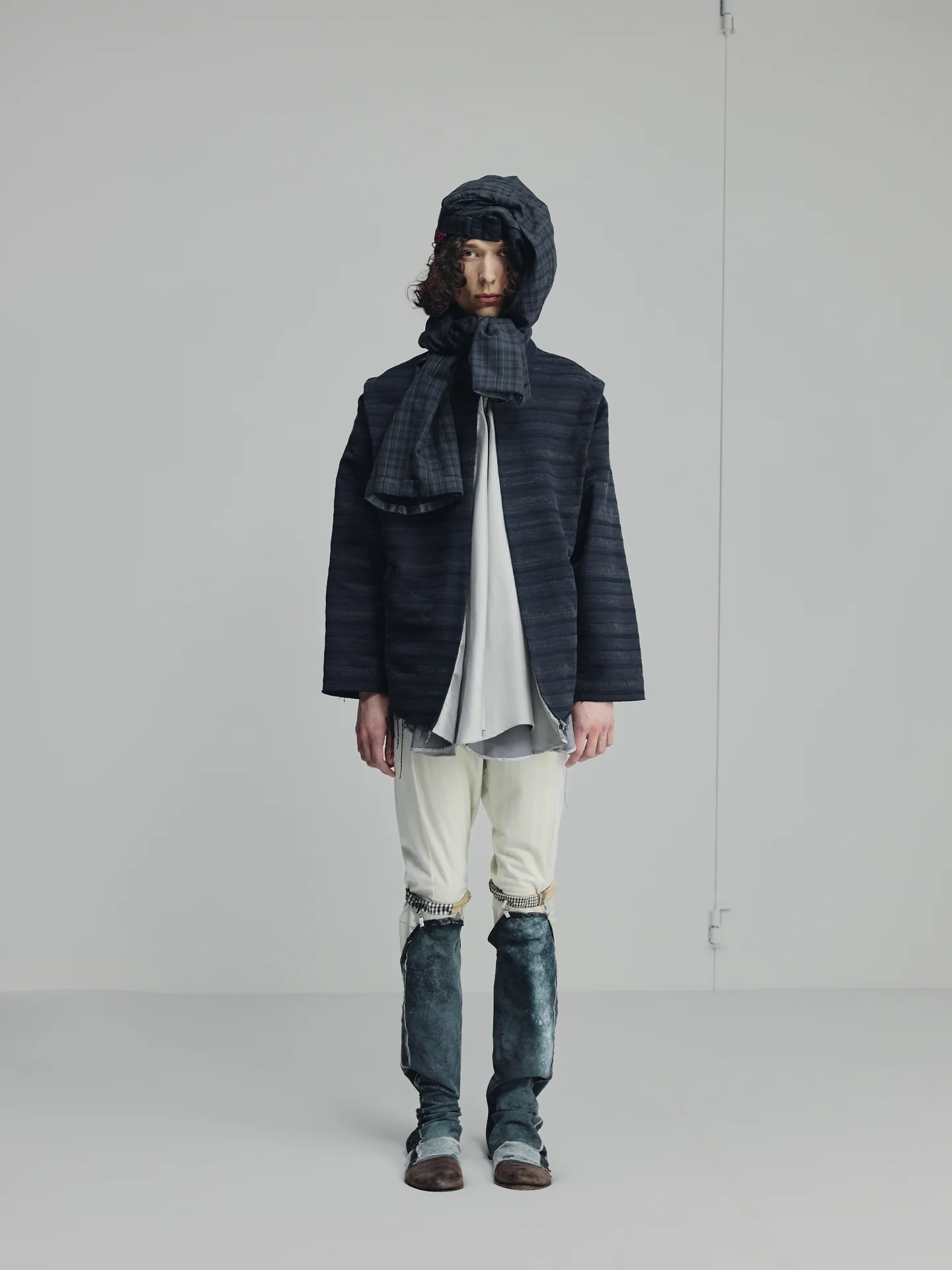 TP 03
TP 03
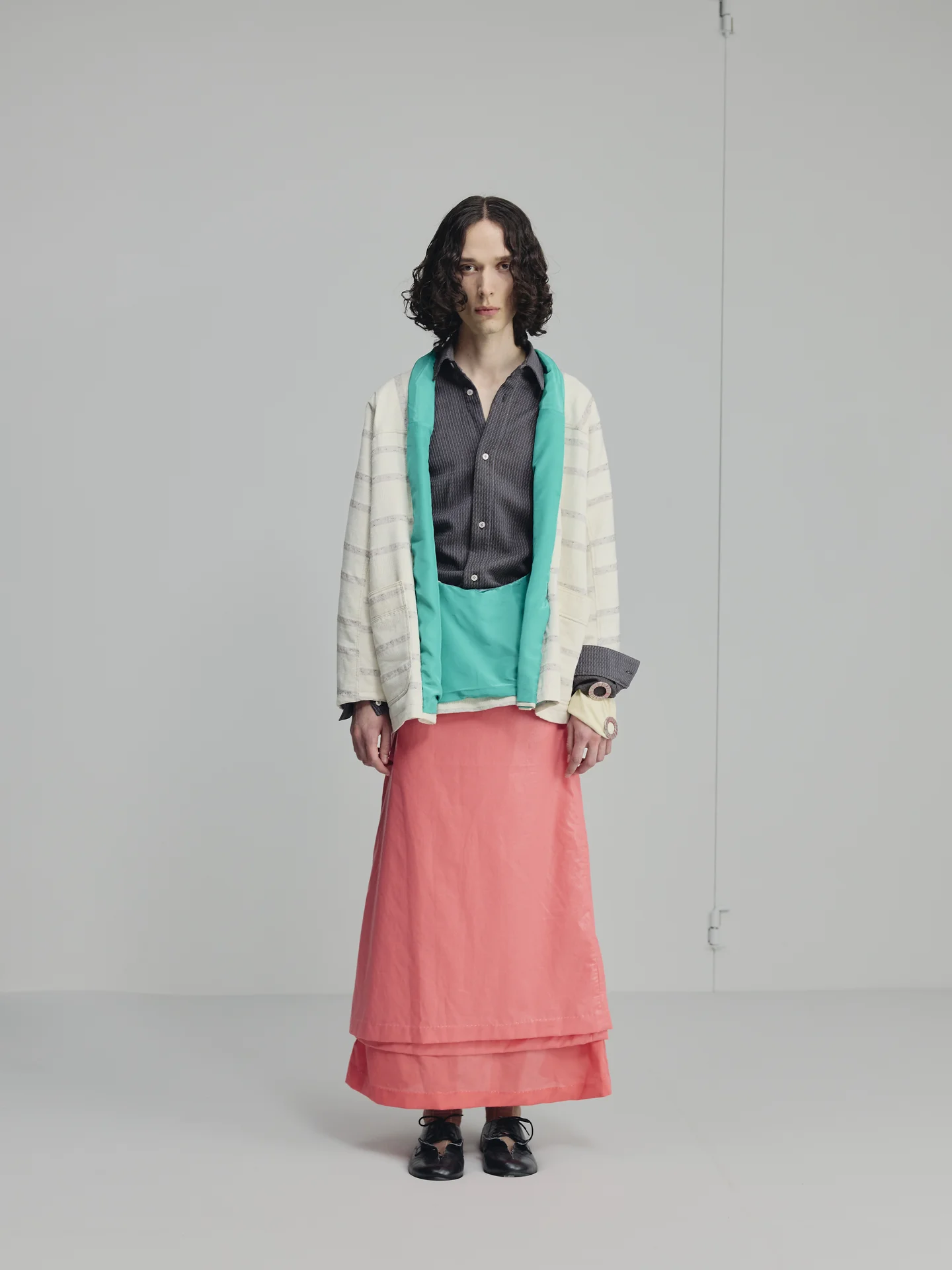 TP 04
TP 04
 TP 05
TP 05
 TP 06
TP 06
 TP 07
TP 07
 TP 08
TP 08
Tomas Piltonen
Kävelisitpä talon lapi (if only you walked through the house.)
“I consider it intrinsically valuable that the otherwise so hollow nature of text can, in this context, be embodied as clothing, whereas it would usually take place through reading or speech. I would describe my process as a kind of sensitisation and a heightened awareness toward the momentary, event-like nature of my work.“
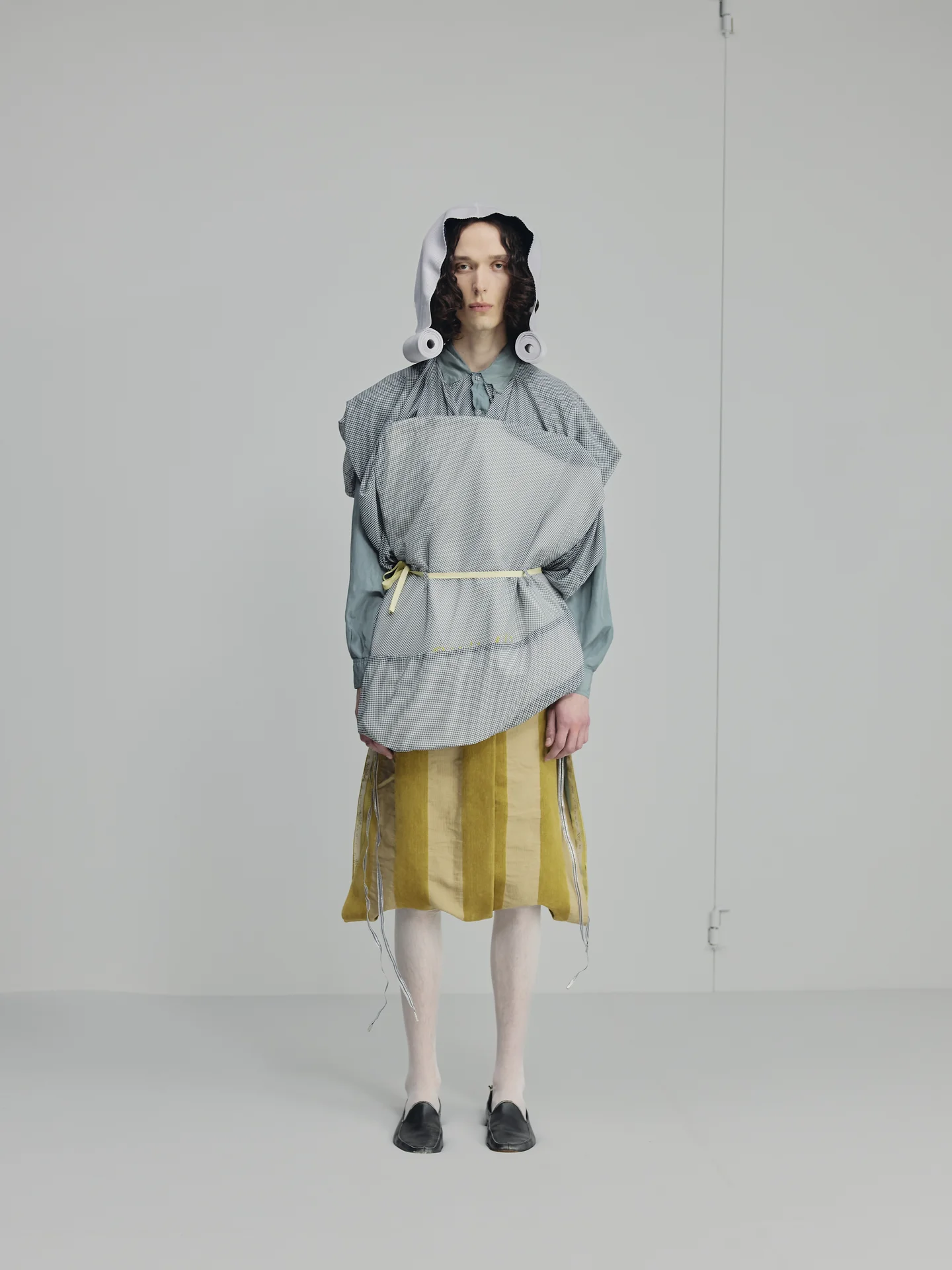
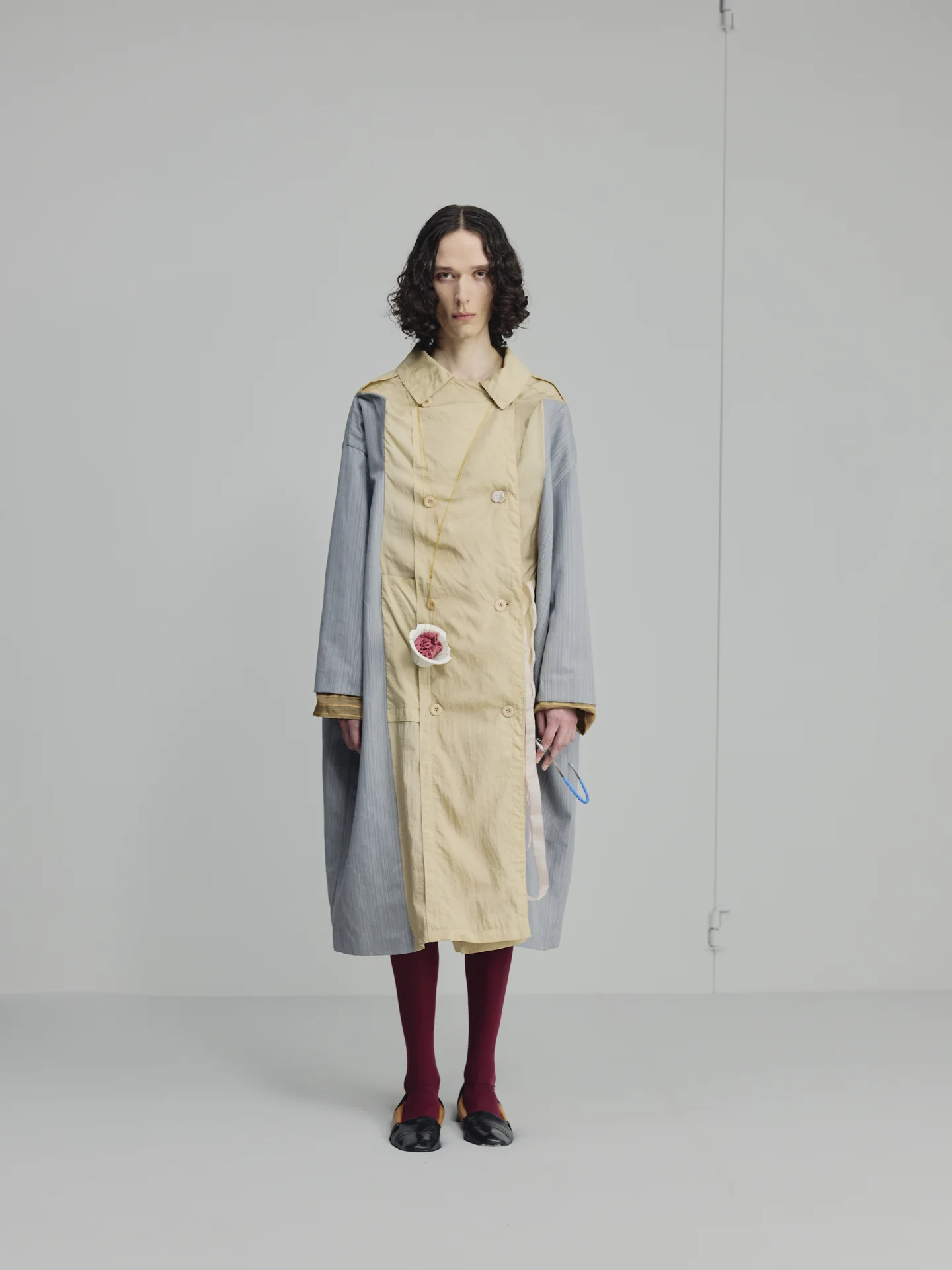
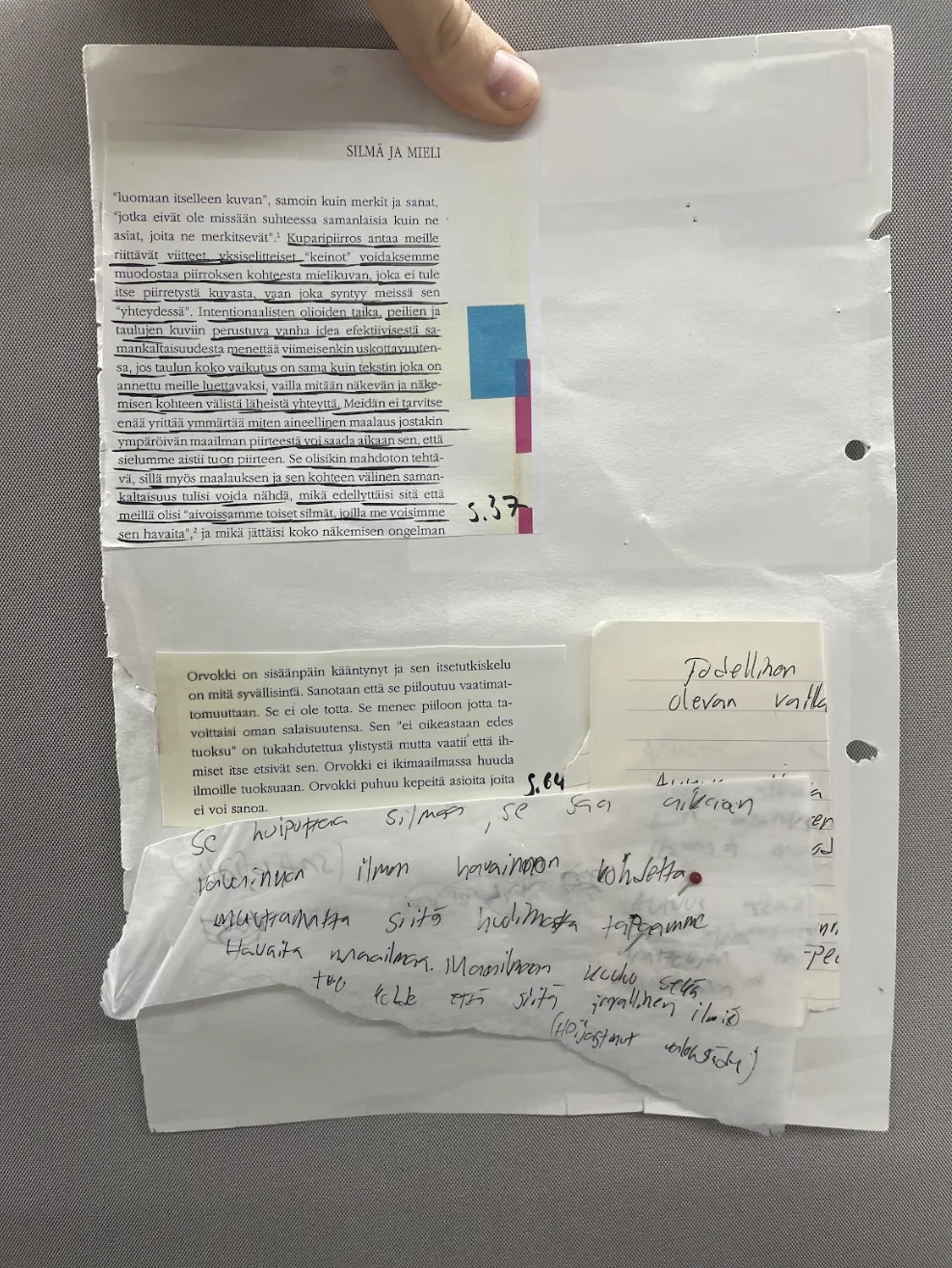
This BA thesis is conceptually grounded in literature and verbal art. The research draws on fragmented quotations from Maurice Merleau-Ponty’s Eye and Mind (1960) and Clarice Lispector’s Agua Viva (1973). The work includes no visual references, allowing language itself to take visual form. In the creative process, written texts are read and translated into garments. Rather than serving as direct instructions, the texts act as scores that initiate making, and the act of making (the process) is in itself the primary justification of the work.
The materials and colors entered the collection more or less by chance, as possible options, with the underlying tone of the process being free and unattached to the final outcome. The garments’ forms include recurring details, and perhaps at their core is a hole — an opening in the fabric through which a limb passes.
“Ambiguity and openness to interpretation in the relationship between the texts and the produced garments are key. The texts themselves do not actually say anything about the garments that emerge from them, nor vice versa. The text, my reading of it, and the resulting garment are simply a structural whole that I follow. I don’t want to explain everything, not even to myself. “
×
![Detail view of Tomas Piltonen work]()